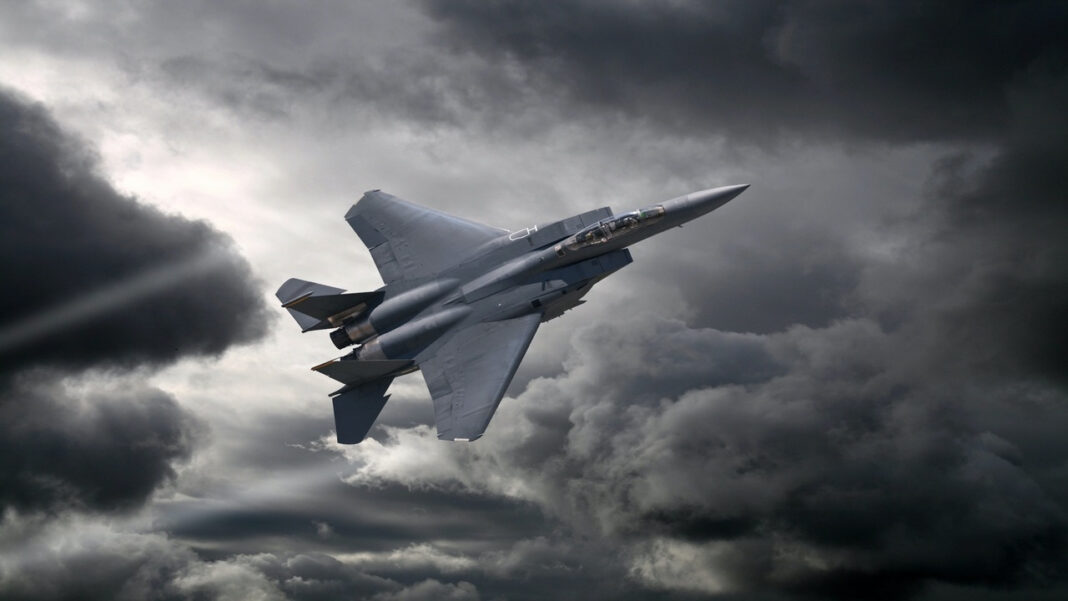
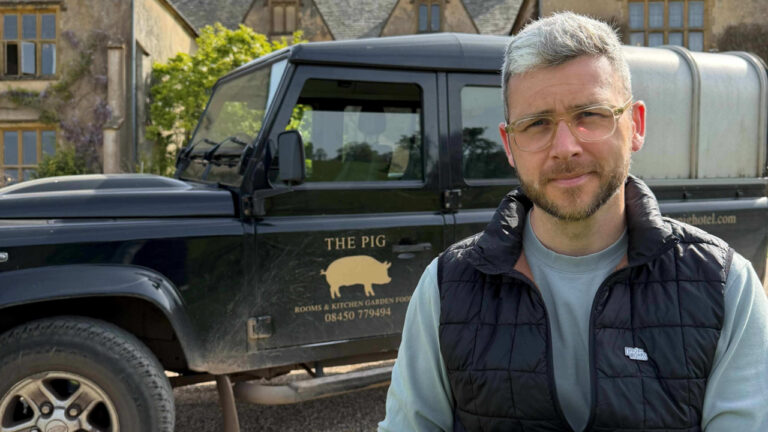
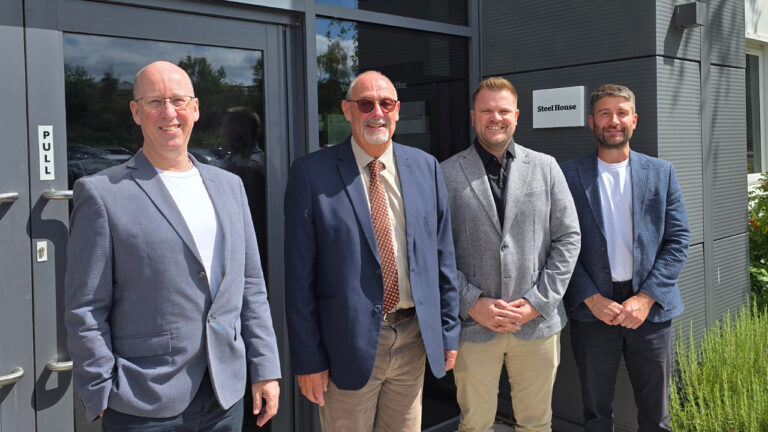
From flying fighter jets at 700 mph to building multimillion-pound businesses, losing everything in a recession and later becoming an author, George Begg has lived multiple high-pressure careers. His new book, The Hidden Story, is the culmination of a decade’s work, building on the foundations of his RAF Fighter Pilot and successful entrepreneurial business career.
Business Mondays sat down with George to talk mindset, risk, resilience and the moment that changed the trajectory of his work.
You’ve had one of the most unusual career paths we’ve seen. What was it like stepping out of the cockpit for the last time and into business?
Leaving the RAF came with mixed emotions. I knew I’d miss the flying—the speed, the precision, the decision-making under extreme pressure—but the hardest part was leaving my squadron mates behind. The camaraderie among fighter pilots is very special.
At the same time, I was ready for a new mission. I wanted to be my own boss and build something from scratch. With no savings, I took out a 100% mortgage on three derelict cottages, renovated them myself and sold them. That led to two nursing homes, which did extremely well, and within a year of leaving the RAF I’d made my first million. It was an exciting, energising time.
Which lessons from RAF training proved most valuable in business?
The biggest one is mindset. In the RAF, you prepare for every possible threat. You think ahead, you run scenarios, and you always have contingency plans. The stakes were life and death, so your thinking becomes extremely disciplined.
In business, the stakes are rarely that high: the worst outcome is losing money, and you can make more. That perspective helps me stay calm and make rational decisions, even under pressure.
Risk management, agility and team performance were the foundations of my military life, and they translate directly to leadership in any sector.
Was there a moment when you realised you were “thinking like a pilot” rather than a businessman?
Absolutely. When I entered the travel industry, I started analysing competitors using the same principles we used in the RAF to assess threats, not based on intentions, but on capability. Intentions can change overnight, but capability takes years to build.
That approach helped me anticipate how major players might move in the market and plan strategies accordingly. It’s essentially the David-and-Goliath mindset: outthink, out-manoeuvre and stay nimble.
Your early business career was marked by huge success – and then a sudden collapse during recession. What did that teach you about leadership?
Humility, preparation and vigilance.
After my first big wins, I was overconfident. I didn’t see the recession coming, and my businesses collapsed. It was a tough lesson, but it changed the way I operate. Now, I am always looking for the clouds on the horizon. If I see a storm coming, I prepare.
Leadership isn’t about assuming things will go well – it’s about preparing for when they don’t.
Your book introduces another turning point – a “white light” experience that changed your trajectory. How did that shape your work?
It happened during a period of rebuilding. I had a sudden, overwhelming flash of clarity—what I describe as a “white light” moment—that shifted how I understood the world.
Instead of turning to doctrine or formal religious interpretation, I approached the experience analytically, the same way I approached flying and business. That began a ten-year period of study, pattern-recognition and reflection, exploring what I believe were insights revealed through that moment and thereafter.
The book grows out of that decade, combining disciplined thinking with the deeper questions many of us ask when going through uncertainty.
What unites all three phases of your career?
Well, that’s a big question. What converged into a single set turned out to be God. As a fighter pilot I was not a believer, and I thought that God didn’t exist therefore had no influence on my life. Then I met God in a white light experience which changed everything. I could communicate with God, and still do, and she guided me throughout my future chapters. The wisdom and business talents that I have, came from her, starting with that experience. The vision I had to start again in the travel industry came from her, as did the wisdom to navigate the roadmap effectively and to a successful conclusion.
I also realised that although I was unaware at the time, God was guiding me throughout my time in the RAF, allowing me to gain valuable experience for what was to come next. The guidance continues in my present time as an author, but in a more profound way. Now, God is directly revealing to me the spiritual mysteries that she hid in scripture, and how to explain them in a series of books. The purpose is to be prepared for the unseen global events, which are around the corner. She has pointed out the storm clouds, and she has explained what the storm will be like. What is our contingency plan? And she has given the vision of the great weather that will come after the storm, which we also need to be prepared for.
So, it is God who has united the three phases of my life, whether I knew it or not.
How do your experiences as a fighter pilot, entrepreneur and now author converge into a unified perspective on leadership?
Discipline, clarity, resilience and a roadmap.
In every chapter of my life, I’ve needed a vision of where I’m going and a plan for how to get there, with the flexibility to adapt when things change. Whether you’re in the cockpit, the boardroom or writing a book, that principle holds true.
Reinvention is a leadership skill. Preparation is a leadership skill. Clarity under pressure is a leadership skill. Those themes connect each phase of my life.
What advice would you give leaders entering uncertain or highly competitive industries today?
First, you need a vision – a clear end point. Without that, you will get lost.
Second, make a plan, or a roadmap, to get to the vision, not based on optimism and full of contingency options.
Third, surround yourself with exceptional people and give them room to excel. Your team is your competitive advantage.
Finally, be prepared for the workload. Building anything worthwhile takes enormous effort. But if you have a roadmap and the resilience to follow it, the results can be extraordinary.
What do you hope readers take away from your book?
That even in times of uncertainty, there are patterns, principles and perspectives that help us make sense of what’s happening around us. Across my RAF career, my entrepreneurial journey and the decade I spent working on my new book, The Hidden Story (Mysteries of the Other Side), there has always been a roadmap. My hope is that the lessons I’ve learned help others find theirs.