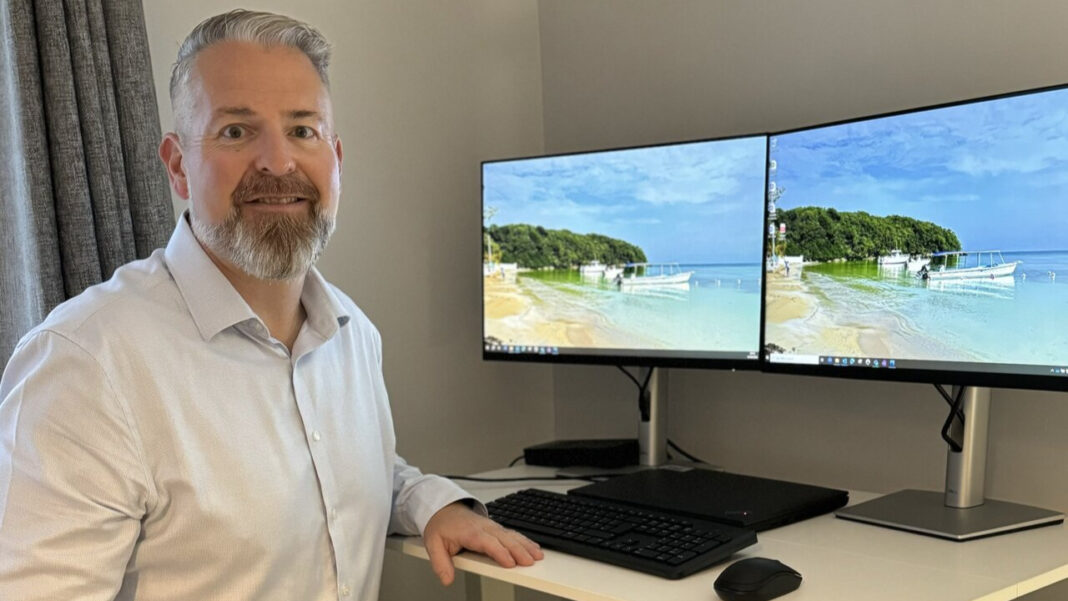
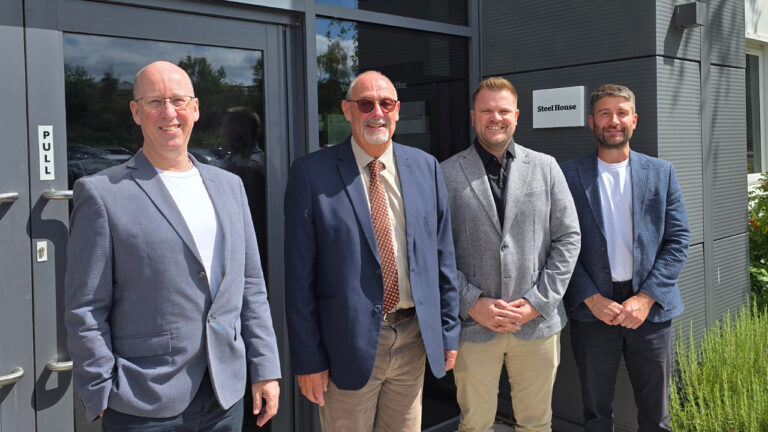
Philip Mitton was recently diagnosed with dyslexia at the age of 50, prompted by his daughter’s diagnosis just months earlier.
The formal assessment suddenly made sense to Philip, who, had struggled throughout school and left with only a small number of qualifications and did not progress into further education.
Despite this, he has worked hard to climb the corporate ladder in the financial services industry – spending the last 15 years in senior roles in tier one banks – and today he is a Business Change Portfolio Director for HSBC.
“If I look back over my life then I know the signs have been there throughout. I left school with very little in the way of GCSEs. The backdrop to this was my sister was a straight A student,” he reflects.
“These days, I have to deal with really quite senior people in my organisation and I got picked up a couple of times last year about my written presentations which were full of typos. It left me feeling uncomfortable and I thought I need to know one way or another.
“To get here, I’ve had to fight tooth and nail. I’ve always been up against people with Masters degrees and well-educated university folk. It’s been hard. Up until recent years, I’ve never been a confident person. I’ve always been anxious about am I good enough? It was a question I used to ask myself a lot. That eventually turned around into ‘no one’s going to tell me I’m not.’ ”
Since diagnosis, Philip has been helped in his journey by Blackpool-based Perfect Support, through a series of assessments and one-to-one workplace wellbeing coaching strategies tailored to helping employees stay productive and employers identify neurodiversity and offering the right sort of support.
Helpful solutions for Philip have ranged from computer tips such as colour-coding documents; enlarging the cursor size on screen; using double spacing between lines and numbers rather than bullet points; mind mapping for a better overall understanding of what dyslexia is; effective planning and reviewing; and a discussion around hybrid working.
He said: “When I received the diagnosis I went through a range of emotions. The first one was, I knew it. I’m glad I’ve pinned it down. The second one was more of anger really. I was quite angry about having been through all the struggles I’d been through. And then I went through a period of feeling quite emotional about the whole thing really and I wanted to tell the world that I’m dyslexic.
“I was told, yes, you’ve got dyslexia, I’ll send you a full report, the irony that these people would send a dyslexic person a 30-page report to read, was not lost on me!
“I think the other thing about receiving this diagnosis so late in life, was just to understand dyslexia and what actually it means to be dyslexic. That helped put it into context and enables me going forward, to identify things which I now know are linked to dyslexia. It’s helpful to have these indicators.”
Far from seeing the new diagnosis as a ‘label,’ Philip feels empowered to move forward with the rest of his life with a fresh perspective. Through the coaching, he has also learned to embrace his key strengths, often referred to as ‘super powers’ associated with being neurodiverse – in his case, problem solving.
“I’m very good at looking at things in a different way. Even in my personal life, friends will just come to me for that different perspective. I’m also a wily old cat, very creative and what I lack in the written ability I make up for in resourcefulness!”
“The impression is that dyslexia is very much overlooked in the workplace and it’s not really a thing. But I genuinely believe there is less of a stigma now. We’ve come a long way. For my daughter’s generation it’s a much better time to receive that diagnosis. There’s a much better understanding and acceptance.
But what advice would he offer to other dyslexics newly diagnosed in later life?
“Take time to process the diagnosis and understand what help and support is available to help make life easier. And secondly, it’s not all bad. There’s some things that we do which other people won’t even contemplate or understand. Embrace it. Play to your strengths. It’s not necessarily the end of the world.
He concluded: “This has been quite an emotional experience for me. It’s made me go back and reflect more and to go from leaving school with no useful qualifications to having a senior leadership role in a global organisation like HSBC is something I’m proud of.”
Philip has been working with Perfect Support Coach Jan Walsh, who has spent 26 years in the field of Special Educational Needs, including dyslexia, ADHD, ASD, dyspraxia and dyscalculia. It’s also a subject close to home as Jan’s own daughter was diagnosed with dyslexia in secondary school.
Jan said: “It was a pleasure to work with Philip and assist him in gaining a better understanding of the implications of dyslexia for him personally. Receiving a new diagnosis has allowed Philip to acknowledge that his work style may differ from that of others and that the way he sees things is a strength.
“Through providing practical support and strategies, Philip now has a clear pathway for progression and an appreciation of the advantages that can come with being dyslexic.”
She added: “The most rewarding part of working with Perfect Support is having a client feel they are understood at the end of their sessions and can see a way to move forward. A client that doesn’t see their dyslexia as a burden, but feels they have a positive contribution to bring to the workplace.
“Understanding how people approach, or indeed avoid, tasks enables strategies to be discussed and new ideas used. For example, they are incredibly innovative thinkers – they think ‘outside the box.’ They are also excellent trouble shooters. They can be creative and solve problems that others may not have even thought about.
“Being able to reach someone who is really struggling and give them the appropriate support is a real privilege. It increases their self-worth and confidence massively.”
She added: “I believe companies are taking on board and developing good support for dyslexic people in the workplace. Listening to my clients, they feel their dyslexia is recognised, however not fully understood.
“Although companies and line managers know people have dyslexia, they often don’t fully appreciate or understand what that means to an individual. It could be helpful if managers were given basic training in how dyslexia affects individuals and what they can do to support. I’m aware that some companies have set up Neurodiverse support groups, where like-minded people can chat to others facing the same challenges they do.”