The percentage of people that want to discover orchestral music has reached its highest level in six years, according to latest research published today by the Royal Philharmonic Orchestra (RPO). Younger audiences and first-time listeners are driving growth, alongside clear public views on the limits audiences place on Artificial Intelligence (AI) in music and live performance.
Broadening audience: The findings from the RPO’s new annual audience research report tracks the public’s interest in, and terms of engagement with, orchestral music. The new findings show that 35% of UK adults want to learn more about orchestral music, up from 20% in 2024 – and 11% in 2021. Among the under-25 age group, interest has risen sharply in a single year, from 11% to 30%. At the same time, long-term engagement has also increased from 28% to 38% – as people new to the genre develop journeys of discovery and become enthusiastic fans.
Diversified concert preferences: Whilst the popularity of core orchestral repertoire has remained at around 23% for the fourth consecutive year, there were big rises in demand for other forms of family-orientated orchestral concerts, including:
- Orchestral concerts that feature pop music – 37% (up from 25% in 2022).
- Orchestral soundtracks from blockbuster films – 35% (up from 27% in 2022).
- Hits from the musicals (e.g. West End, Broadway etc.) – 33% (up from 28% in 2022).
Part of the music playlist of daily life: The RPO’s tracking research shows that engagement with orchestral music outside the concert hall is driving the appetite to experience live performances. Over the past year:
Eight in 10 UK adults (80%) say they now encounter orchestral music as part of everyday life.
Listening while commuting has nearly doubled, rising from 15% to 28% year-on-year.
One in three adults (34%) say orchestral music now forms part of their holiday playlist, more than double the previous year’s figure.
AI in music: a new exploration
Alongside long-term audience trends, the RPO’s annual insight report also includes newly commissioned national polling on public attitudes to Artificial Intelligence (AI) in music. At a time when the industry is locked in serious debate over the perceived opportunities and risks of AI, the RPO felt it was time for audiences to be heard and part of the debate.
Key findings:
Britain in 2025: The RPO asked a representative sample of 2,000 adults to predict which areas of the Arts will AI have replaced humans in by the year 2050 and in which areas will AI simply not touch the uniqueness of human creativity. Nationally, the results show there was not a dystopian threat to human creativity across the board, with live performance – whether music or theatre – seen to be the safest havens. In contrast, recorded music along with photography, were the areas seen to be most at risk of AI taking over in the next few decades.
AI take-over or enduring human creativity? The public view on the Arts by 2050
AI will not touch human creativity
AI will have replaced humans by 2050
Live music concerts
78%
22%
Theatre productions
78%
22%
Musical theatre
77%
24%
Sculpture
73%
27%
Fine art
66%
34%
Poetry
61%
39%
Studio recorded music
50%
50%
Photography
47%
53%
Good or bad for innovation in music: Overall, people were more than twice as likely to think AI would stifle creative innovation (56%) rather than enhance it (21%).
The most acceptable uses of AI: related to mixing and mastering (30%), the restoration of archive catalogues (46%) and personalised playlist recommendations on streaming platforms (17%).
The music genre differentiator with AI: People think AI positively works best for dance (49%), pop (46%) and rap (36%) music. People didn’t think AI works well for classical (45%), blues (75%), folk (77%) and soul (76%).
Concerns over the consequences of AI: The majority of people (51%) mentioned music being copied without royalties being paid (51%) and the implications for local music venues, if people stopped going to see live bands as a result of AI (48%). In addition, 38% of people were concerned about the impact on career pathways in music – specifically, if people stopped studying music at school and college because they felt career opportunities were limited.
The aspects of a music concert that cannot be replaced by AI: The concertgoer viewpoint:
- The uniqueness and special ‘moment in time’ of a live performance – 41%
- A memorable social event that can be a special night out – 36%
- The collective atmosphere/shared experience with the audience – 34%
- The visual spectacle – 31%
The elephant in the room? Artists will survive AI – but will they have an audience to perform to? Job loss from AI is a big fear. The vast majority of survey respondents (85%) say they would cut back on discretionary expenditure if they lost their job to AI. Whilst eating out and holidays would be the first to go, live music events (42%) would be next on the cutbacks list.
Sarah Bardwell, Managing Director of the Royal Philharmonic Orchestra, said: “From many years of tracking research by the RPO, the picture that emerges is one of evolution. The orchestral audience is growing and diversifying – and in a healthy and inclusive way. Time shows that the new and established audiences are inextricably linked – the growth of the established audience in 2026 is the positive consequence of people starting journeys of discovery with orchestral music five or ten years ago. Furthermore, our data tells us that people are discovering orchestral music in new ways, enjoying richly diverse concert experiences and, outside the concert hall, they are carrying orchestral music it into many facets of everyday life – from cooking and studying to brightening the commute, to and from work.”
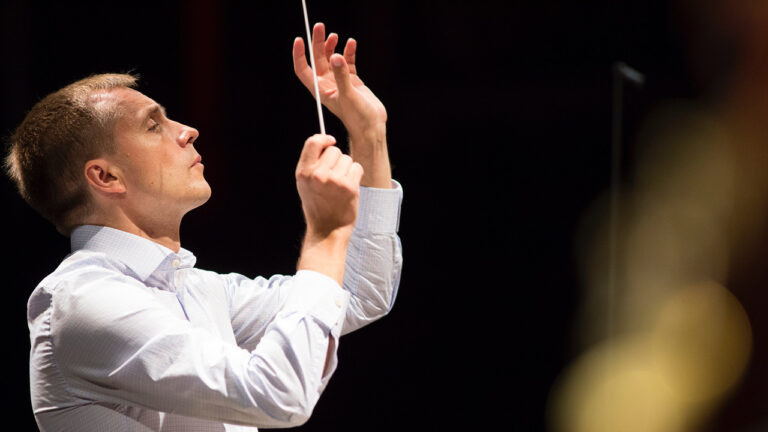
Reflecting on the RPO’s new research on AI in Music, Vasily Petrenko Music Director of the Royal Philharmonic Orchestra adds: “In many ways, human creativity and AI can co-exist because they offer different strengths. The RPO research revealed that the public felt AI could be used successfully to enhance the production side of recording music – such as the mastering of new recorded music and the restoration and audio enhancement of archive recordings. In terms of the creation of music, AI may in theory offer perfection, but great art is often art precisely because of human imperfections implicit within the shape and form of the piece. This is true of many great paintings for example. Any creative act – any art – always has an element of hesitation in the mind of an artist. Not hesitation in the exact moment of creation, but about the ‘fullness’ or ‘completion’ of the object. One of many examples might be the Unfinished Symphony by Schubert. This kind of hesitation is completely beyond AI, in terms of structure and idea. This adds weight to the thought that change and continuity can co-exist.”