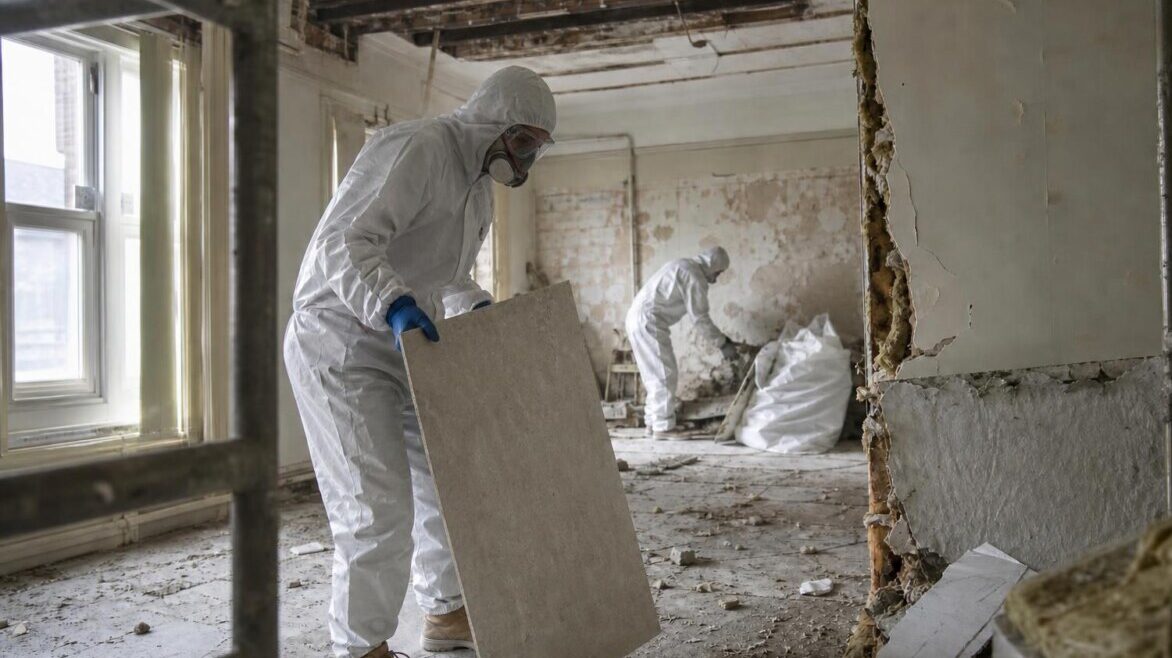
Yes, asbestos got banned in the UK back in 1999. But that ban didn’t make the stuff disappear from buildings that were already standing. Any property completed before 2000 could still have it, and in a city like London, that covers an enormous chunk of the building stock. Offices, schools, hospitals, housing blocks, they all went up during decades when asbestos was mixed into just about everything.
Most of it sits undisturbed behind walls and above ceilings, causing no immediate harm. The trouble starts when someone decides to renovate. London’s in the middle of a massive refurbishment push right now, with billions going into upgrading older properties across the capital. That means thousands of buildings containing asbestos will get torn open, drilled into and stripped back over the coming years, and the people doing that work need to understand exactly what they’re dealing with before they start.
Where Asbestos Hides in Older London Buildings
It got everywhere. Textured coatings, floor tiles, insulation boards, cement sheets, roofing felt, even the adhesive holding tiles to the wall. In older London properties, you’ll find it behind boiler cupboards, wrapped around heating pipes and sprayed onto structural steelwork as fire protection. The problem is that none of it looks particularly dangerous, and there’s no way to tell what contains asbestos just by looking at it.
That’s what makes it so risky for tradespeople who work in these buildings every day. Electricians drill into walls. Plumbers pull up old flooring. Maintenance workers cut through ceiling panels to get at pipework above. None of them can see the fibres they might be releasing, and many won’t even know asbestos is there unless someone has already surveyed the building and told them about it.
Why This Still Kills Thousands Every Year
The HSE puts the number at around 5,000 deaths per year from asbestos-related diseases across Great Britain. That includes mesothelioma, asbestos-related lung cancer and asbestosis. In 2024, there were 2,146 mesothelioma deaths recorded. These illnesses can take decades to show up after exposure, which means the people getting diagnosed today were often breathing in fibres back in the 1970s, 80s and 90s.
For construction and maintenance workers today, the reality is blunt. The fibres are invisible. A single period of heavy exposure can be enough to cause a fatal disease years later, sometimes decades later. That’s why asbestos awareness is now a standard part of London health and safety training. Workers learn how to recognise suspect materials and what to do when they find them on site. Without that knowledge, anyone breaking into an older building is taking a gamble with their health, and they might not find out the cost for another twenty or thirty years.
The Legal Duty to Manage Asbestos
Regulation 4 of the Control of Asbestos Regulations 2012 places a clear legal duty on anyone responsible for maintaining a non-domestic building. They have to find out whether asbestos is present, assess the condition of it and keep a written record. Building owners, landlords, managing agents and facilities managers all fall within scope.
If you’re responsible for a commercial property built before 2000 and you don’t have an up-to-date asbestos register, you’re already breaking the law. A lot of people don’t realise the duty also covers shared areas in residential blocks, things like communal hallways, stairwells, plant rooms and roof spaces. That catches quite a few London housing associations and freeholders off guard, especially those managing older estates where surveys were never done properly in the first place.
What the Next Decade Will Look Like for London’s Workforce
Asbestos-related deaths in Great Britain are finally falling, but only gradually, and the HSE expects the decline to run on through the 2030s rather than end the problem any time soon. One encouraging sign is that mesothelioma deaths below age 65 keep dropping, which suggests exposures really did fall once controls tightened from the 1970s onwards. Still, for the thousands of tradespeople currently working on London’s ageing building stock, the risk hasn’t gone anywhere.
Over the next ten years, London will see more demolitions, more retrofits, more energy efficiency upgrades and more large-scale conversions than it has in a long time. Every one of those projects will disturb buildings likely to contain asbestos. What will actually save lives is whether workers get trained to recognise the material before they go near it, and whether building owners bother to survey and manage what’s already sitting in their properties.
Construction across the capital is booming, and the economy benefits from that. But asbestos doesn’t care about project timelines or tight budgets. Knowing what you’re dealing with before you pick up a drill is the only real protection anyone has.