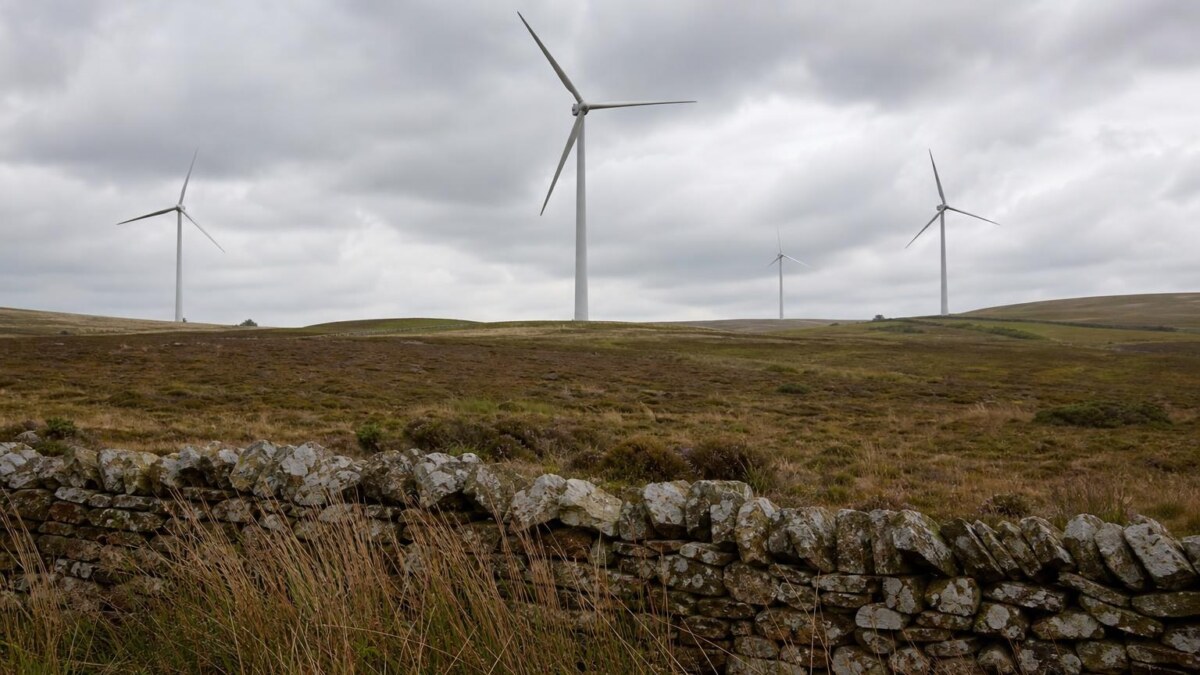
The policy environment for onshore wind in England has long made bringing forward new schemes extremely challenging. As a result, the sector rarely featured prominently in conversations around the strategic land market. That is now changing.
The Government has made it clear that it wants onshore wind to play a much greater role in the UK’s energy mix. Planning policy has changed, larger projects have been brought back into the Nationally Significant Infrastructure Project regime and the Government’s 2025 Onshore Wind Taskforce strategy set out a series of measures intended to remove some of the barriers that have held the sector back. Its ambition is for 27–29GW of onshore wind capacity across Great Britain by 2030, with around 2GW coming from England.
The policy ambition is significant, but the practical question now is where the projects will go. That is where land comes in.
At Keyland, we are starting to see genuine interest in land for onshore wind development. We have identified opportunities covering more than 565 acres and are currently bringing sites forward to the market for consideration by experienced renewable energy developers and investors, including two in West Yorkshire and one in South Yorkshire, with further pipeline opportunities being worked on.
For us, the important point is not that every piece of open land is suddenly a potential wind farm. It isn’t. There is a considerable amount of work between identifying land and establishing whether a scheme could actually work. Grid connection, landscape and visual impact, ecology, access, neighbouring uses, planning policy and the relationship with local communities all have to be considered. There is also the commercial question of whether a project is capable of being delivered
That distinction matters because the return of onshore wind will inevitably bring more land into consideration. The industry needs to be careful not to confuse a greater appetite for renewable energy with a simple increase in the supply of suitable sites. Finding the right land is the starting point.
Yorkshire has an interesting part to play in this. It is a region with a substantial land base, a strong industrial and infrastructure heritage and a long association with energy and power generation. It also has a varied landscape, which means the question of where development is appropriate needs to be taken seriously.
For landowners, there is another consideration. Land that has traditionally been assessed primarily for agricultural, residential or employment potential may now have another possible use. That does not mean renewable energy will necessarily be the highest or most appropriate use, but it does mean it needs to be part of the conversation.
When assessing the suitability of potential onshore wind sites, location to a grid connection and accessibility are two important points. However, we are also considering sites where a wind scheme could be used to fund greater improvements to a site, be that enhancements to biodiversity or soil
There is also a broader issue around how the development industry responds to the Government’s ambitions. The policy changes remove some significant barriers, but they do not remove the complexity of delivering infrastructure. The Government itself recognises this – its Onshore Wind Taskforce strategy says projects can typically take four to nine years from inception to operation and acknowledges that attrition rates can be high.
That means building a meaningful pipeline matters. It also means identifying potential sites early enough to understand their constraints before too much time and money has been committed. Some sites will progress where others will not, which is part of the process.
There is a tendency to think about renewable energy infrastructure at a very large scale: offshore wind, national grid investment and major energy projects. Those developments are obviously important, but the transition also depends on a much wider network of individual land opportunities. That is why the land market has a role to play.
For Yorkshire in particular, the opportunity should not be viewed simply through the lens of energy generation. Well-considered renewable development can form part of a wider conversation about how land is used and what it contributes over the long term.That needs to include the interests of landowners and developers, but also the communities and environments around potential schemes. The planning system still has to test individual proposals on their merits, and the fact that policy is now more supportive of onshore wind does not make every location suitable.
Rather than the misconception that a landowner needs to choose between a renewable project or improving the quality and biodiversity of a site, we have seen multiple examples where both have been possible. Some examples use the income from a renewable project to fund the wider natural improvements. The approach not only contributes to Britain’s energy security, but also improves the condition of the surrounding land.
The important change is that these conversations are now happening again.
For the first time in many years, there is a policy framework that gives onshore wind a clearer route back into the English development pipeline. Government has also recognised the need for the planning system to rebuild the skills and capacity needed to deal with new applications after a long period in which very few were coming forward.
Yorkshire does not need to put itself forward for every renewable energy project. Nor should it. But it does have land that could make a contribution, and the industry now has an opportunity to establish where that contribution can be made in a way that is commercially realistic and properly considered.
Our current work across West and South Yorkshire is still at an early stage. There are no guarantees that every opportunity we are exploring will ultimately become a wind project. But that, in itself, is an important part of the story.
The return of onshore wind starts with finding land where a project has a realistic prospect of working. Yorkshire has a role to play in that process and we are starting to see the market move.
By Joe Boothman, Land & Development Manager, Keyland