For a business owner, reaching number one on Google can feel like a hard-earned win. After months spent improving the website and paying for SEO, customers should finally be able to find the business when they need it.
But a customer asking ChatGPT the same buying question may never see its name.
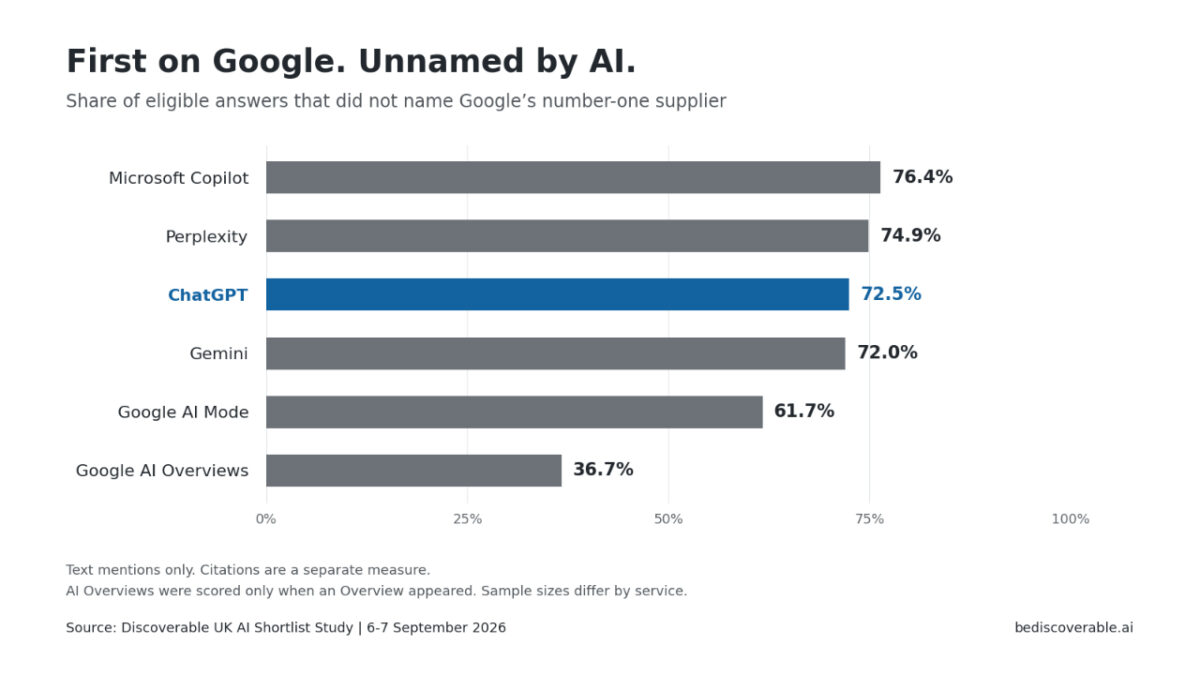
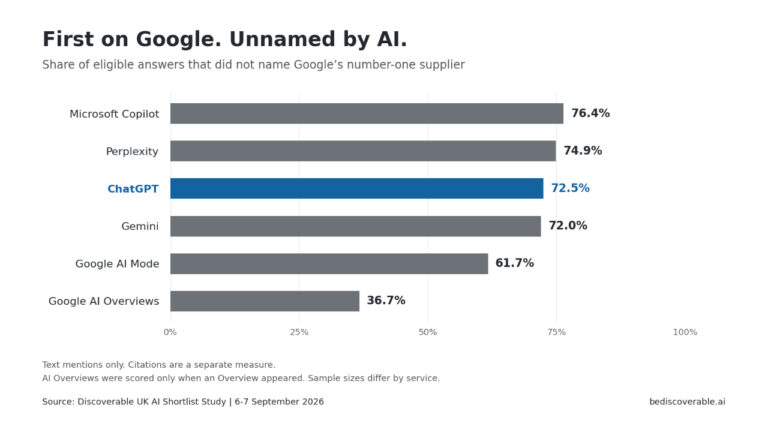
Research published by Discoverable found that the business occupying Google’s first organic result went unnamed in 72.5% of eligible ChatGPT answers. Nearly three in four.
The finding comes from its UK AI Shortlist Study, which tested 1,000 buying questions across 25 commercial categories. It raises an uncomfortable question for businesses that have built their marketing around Google: how much does a strong search ranking reveal about their visibility in AI answers?
The headline comparison covered 1,632 ChatGPT answers where Google’s first organic result was a supplier’s own website and the answer could be scored. That supplier went unnamed in 1,183 of them. The comparison included 396 businesses across 575 questions, with repeat checks.
For an owner who has worked hard to earn that top position, it is a reason to look beyond the familiar ranking report.
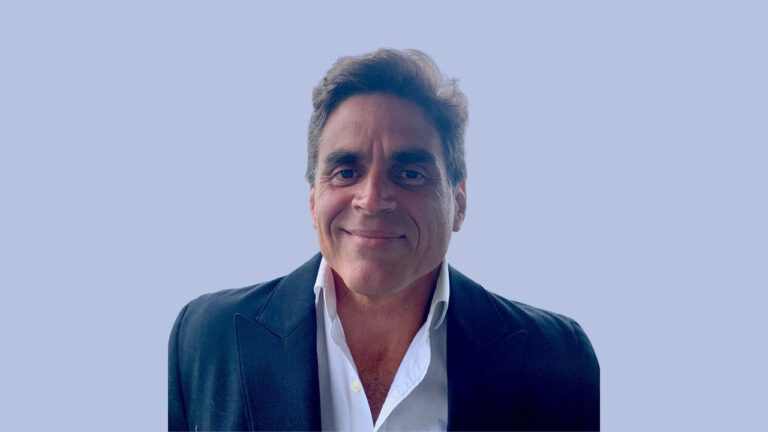
“Getting to number one on Google takes work,” said Jon David, Media Relations at Discoverable. “A business owner could quite reasonably think that means they’re easy to find. Then someone puts the same question into ChatGPT and the business doesn’t get a mention. That’s the gap we wanted to understand.”
Discoverable collected 17,537 completed answers from six consumer AI services, alongside 3,000 captures of Google results. The services were ChatGPT, Microsoft Copilot, Gemini, Perplexity, Google AI Mode and Google AI Overviews.
The research used browser automation to collect answers from the consumer websites. Identical question wording was submitted across the services in three rounds on 6 and 7 September 2026. Google was checked in each round too.
Discoverable designed and carried out the collection and analysis. The final findings have been human-verified. The questions and collection protocol were fixed before the main collection began.
Across all six services, the business at Google’s first organic position went unnamed in 66.2% of scored comparisons. The results varied between services, but the broader finding was consistent: a Google ranking alone could not tell a business owner whether the company would be named in an AI answer.
The examples make that difference easier to picture.
For the question “cheap coffee for a moka pot”, coffee supplier Iron & Fire ranked first on Google in every round. It was not named in any of the 17 available AI answers, and none of the captured citations pointed to its website.
Someone following the Google result could therefore encounter a business that someone reading the captured AI answers would not see.
Another question produced a very different result. For “free platform for selling digital products”, Payhip ranked first on Google in all three rounds and was named in all 18 AI answers.
Both examples were selected after collection to illustrate different outcomes. They show how visibility can vary from one question to another. The study did not establish why Payhip appeared so consistently or whether the same pattern would hold on another day.
Mentions and source links tell different stories. An AI service can cite a company’s website without naming the company in the answer itself. Those are different forms of exposure.
When either a mention or a captured citation counted as presence, the ChatGPT omission figure fell from 72.5% to 68.0%. For Perplexity, the difference was larger: 74.9% of eligible answers did not name the Google number-one business, falling to 55.9% when citations counted.
The answers themselves also need context. Some explained a process or asked a follow-up question without naming suppliers. One ChatGPT answer to the coffee question asked for the shopper’s location. Such answers could still count as omissions under the study’s definition.
For businesses, the practical starting point is straightforward. Take a buying question a prospective customer might genuinely ask and see what appears. Leave the company name out of the question. A buyer who has never heard of the business is unlikely to include it.
Then read the answer properly. Is the business named? Does its website appear among the sources? Repeat the check, because a single answer can give a misleading impression.
That exercise can expose a gap which a Google ranking report alone would miss. It can also show where a business is already appearing.
The research is a UK-focused snapshot, with all collection requests specifying Great Britain. Its questions were selected for the study and were not weighted by search volume. Missing answers and ambiguous matches were excluded. AI Overviews were assessed only when an Overview appeared.
Sales and customer behaviour were outside the study’s scope. It measured whether businesses were named in the answers collected.
Discoverable, an AI visibility software company serving businesses internationally, has published the full findings and supporting evidence. The materials include the exact questions and