Recycling specialists Scott Bros have seen demand soar for their recycled sand following the award of ENATS certification, a key industry standard for materials used in power infrastructure projects.
The family-run firm, based at Haverton Hill, Billingham, is now ramping up production after supplying several thousand tonnes of recycled sand to solar farms and high-voltage cable installations, where it is used for backfilling and bedding underground electrical cables.
The certification – ENATS (Energy Networks Association Technical Specification) – confirms that Scott Bros’ recycled sand meets the strict performance, cohesion and safety standards required for solar energy and grid connection works.
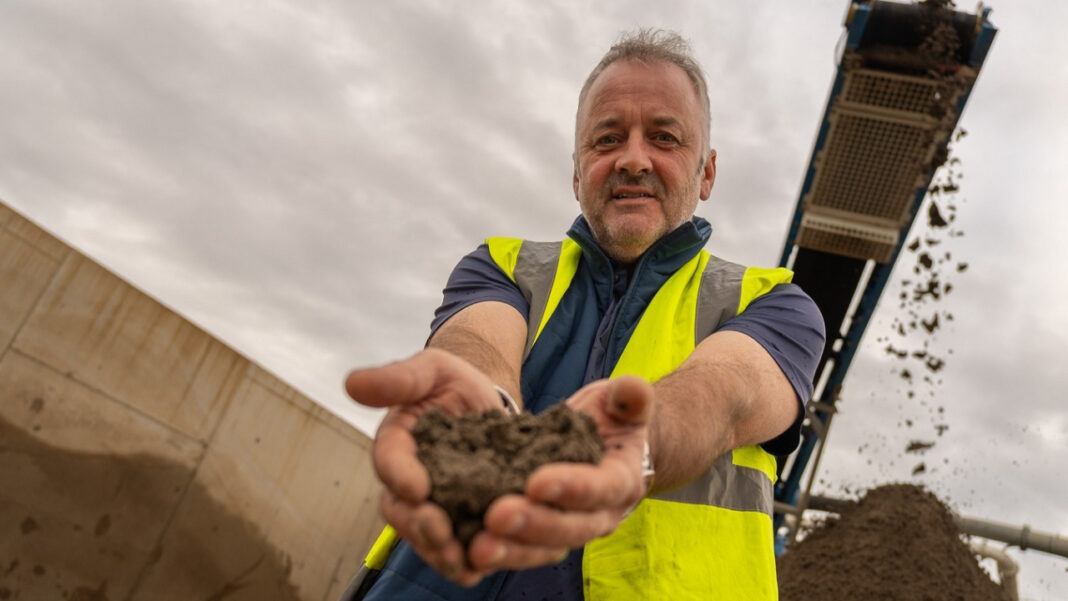
The material is produced at the company’s £6 million wash plant in South Bank, Middlesbrough – one of the UK’s largest ‘urban quarries’ – which transforms construction and excavation waste into British Standard sand and aggregate. As well as being environmentally sustainable, the recycled product is more cost-effective than traditionally quarried alternatives.
Director Peter Scott, who led the product development to achieve ENATS approval, said: “We’re proud to be one of a few suppliers of recycled sand in the area to meet the ENATS standard. Solar farm developers need materials that protect high-voltage cables from damage and maintain stable heat transfer. The fact that they put a rather large dent in our stockpiles shows the scale of demand for reliable, sustainable alternatives to virgin sand.”
Peter and his team refined the production process by increasing the ratio of extra-fine particles in the sand to deliver added cohesion, ensuring it performs to ENATS requirements.
Scott Bros’ recycled building sand and sharp sand are already in wide use across sectors ranging from commercial construction to golf course drainage and turf management, where they help improve surface firmness and water movement.
Fellow director Bob Borthwick added: “It’s especially rewarding when you consider that, not too many years ago, the construction and excavation waste now being processed into ENATS-approved sand would likely have ended up in landfill or as low-grade fill.
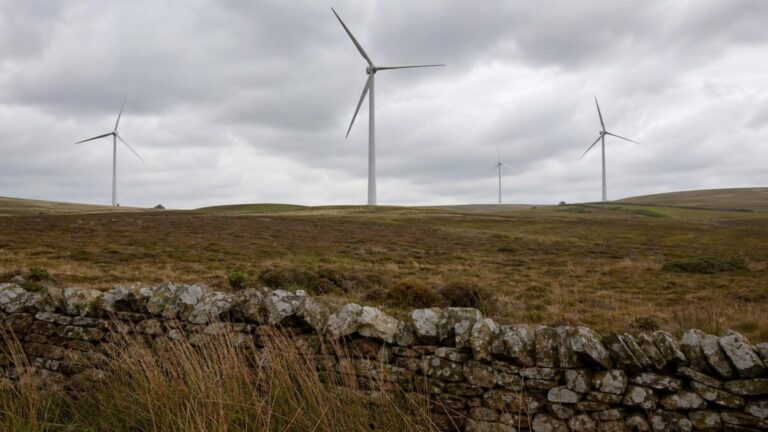
“It’s a great example of how recycled materials can replace virgin resources without compromising performance. Every tonne we supply saves the equivalent volume of natural sand from being quarried. Renewable energy developments, particularly solar farms, are being built at pace across the UK, and we’re pleased to support the sector reduce both its costs and carbon footprint.”