Data analysis comes amid the Government’s recent announcement to invest £200 million in a SEND teacher training programme
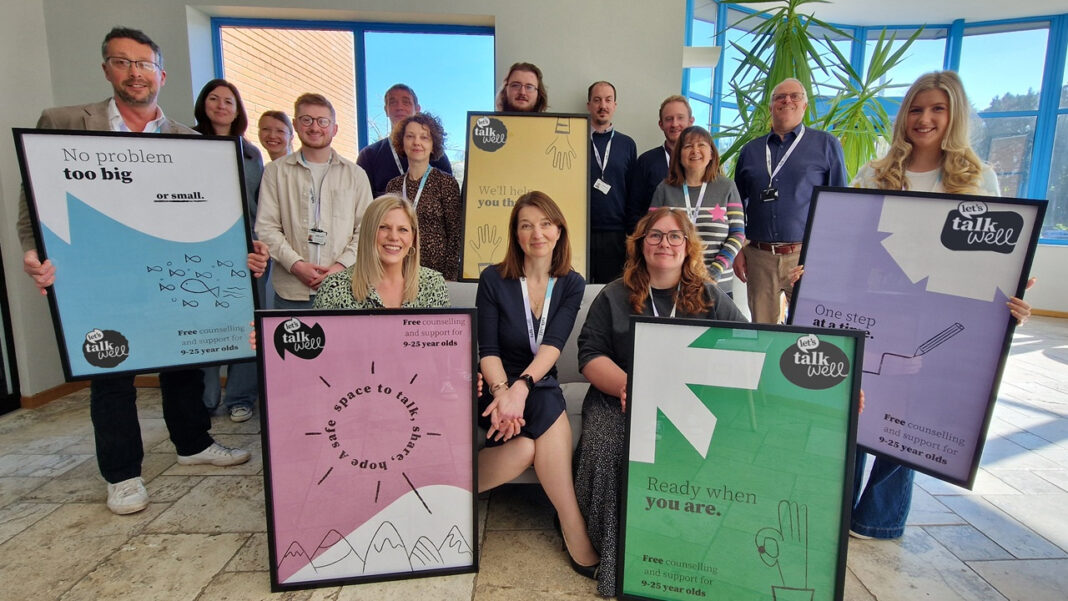
New government data analysis by local charity, Let’s Talk Well, reveals that the number of children in Gloucestershire with Autistic Spectrum Disorder (ASD) entering the state education system has grown by over 40% in the last three years.
The charity, based in the Forest of Dean, which supports the mental wellbeing of children and their families, found that since 2022, there are today 42% (443) more pupils in state-funded primary schools, from Reception to Year 6, with autism, and 59% (628) more in state-funded secondary schools in the county compared to three years ago.
Let’s Talk Well’s recent data analysis also revealed that 69% (306) of autistic primary school children in Gloucestershire and 40% (253) of autistic secondary school children have an Education, Health and Care (EHC) plan.
The findings follow the Government’s recent announcement to invest £200 million in a SEND teacher training programme, equipping every teacher with the skills to support a range of classroom needs including those with speech and language challenges. The analysis also marks the launch of the charity’s sponsored Children and Young People’s Mental Health Conference on 27 March at Cheltenham Racecourse, Gloucestershire, supported by brands such as Benefact Group, Mayden, Dove Self Esteem Project and Winston’s Wish.
Absenteeism
Encouragingly, the Department of Education’s Data confirms that absence rates among local children with ASD in primary and most secondary classes are falling.
Gloucestershire absence rates: State-funded primary & secondary (Autumn & Spring terms) from Department of Education
Year group
2022/23 (%)
2024/25 (%)
Difference (pp)
Year 1 and below
6.16
5.69
−0.47
Year 2
5.49
4.97
−0.52
Year 3
5.37
4.53
−0.84
Year 4
5.61
4.71
−0.90
Year 5
5.67
5.01
−0.66
Year 6
6.04
5.40
−0.64
Year 7
6.38
5.76
−0.62
Year 8
8.04
7.52
−0.52
Year 9
9.37
8.53
−0.84
Year 10
9.66
8.79
−0.87
Year 11
9.88
9.54
−0.34
Year 12 and above
2.76
3.76
+1.00
The biggest decline was among pupils in Year 4, with absence rates falling by 0.90% from 5.61% in 2022/23 to 4.71% in 2024/25 while for pupils in Year 12 and above the rates have increased by 1% over the same period.
Logan aged 17 from Gloucestershire was diagnosed with ADHD at 14 and shares his struggles of school: “Before my mum sought help life felt overwhelming. School was hard, fitting in felt impossible, and I didn’t see a future for myself. I was struggling with my mental health and I’d been suicidal. Things felt really dark.
“Professional support from the Neurodiversity Hub genuinely saved my life. I still struggle with my mental health but now I have purpose, support, and hope.”
A founding member of Gloucestershire Neurodivergent Youth Council, which supports local government on policy around youth neurodivergence, Logan will be leading a panel of young people at the Let’s Talk Well conference to share what it’s like living with ADHD, what does and doesn’t help and advice for professionals.
Judith Bell, Chief Clinical Officer at Let’s Talk Well said: “Our analysis of the most recent Department of Education data demonstrates that the rate at which the number of children in the state-funded education system, diagnosed with autism, continues to grow at pace. We believe this demonstrates the need for a conference dedicated to upskilling professionals working with children and young people to enable improved support for the next generation.”
In March over 250 attendees will gather for the charity’s conference, bringing together professionals, lived experience voices, and community leaders to explore innovative approaches to mental health and wellbeing support for neurodivergent children and young people. The conference will cover key challenges including anxiety, emotionally based school avoidance, self-harm, eating difficulties, and gender identity, sharing knowledge, best practice, and practical tools.
Author and lecturer on child and adolescent mental health, and keynote speaker, Dr Pooky Knightsmith said: “Behind every one of the statistics identified by Let’s Talk Well is a young person trying to navigate a world that wasn’t designed for how their brain works. These young people don’t need more labels. They need adults around them who understand, who can create safety, and who know what actually helps. That’s what this conference is about.”
Judith from Let’s Talk Well continues: “Through our Children and Young People’s Mental Health Conference we’re aiming to give professionals the tools and understanding they need to better support neurodivergent young people. Neurodivergence can have a big impact on mental health, and when young people feel worried, frustrated, angry or sad, it can be confusing and isolating. This event will focus on practical strategies to help professionals respond in ways that make a real difference.
“We’re incredibly grateful to all our sponsors including Benefact Group, NHS Gloucestershire ICB, Simplicity and Mayden for making this event possible, and we’re calling for more businesses to get involved. By investing in this event, companies will be helping to create a future where every young person gets the support they need.”
Let’s Talk Well’s Children and Young People’s Mental Health Conference 2026, understanding and working with Neurodivergence, takes place on 27 March at Cheltenham Racecourse.