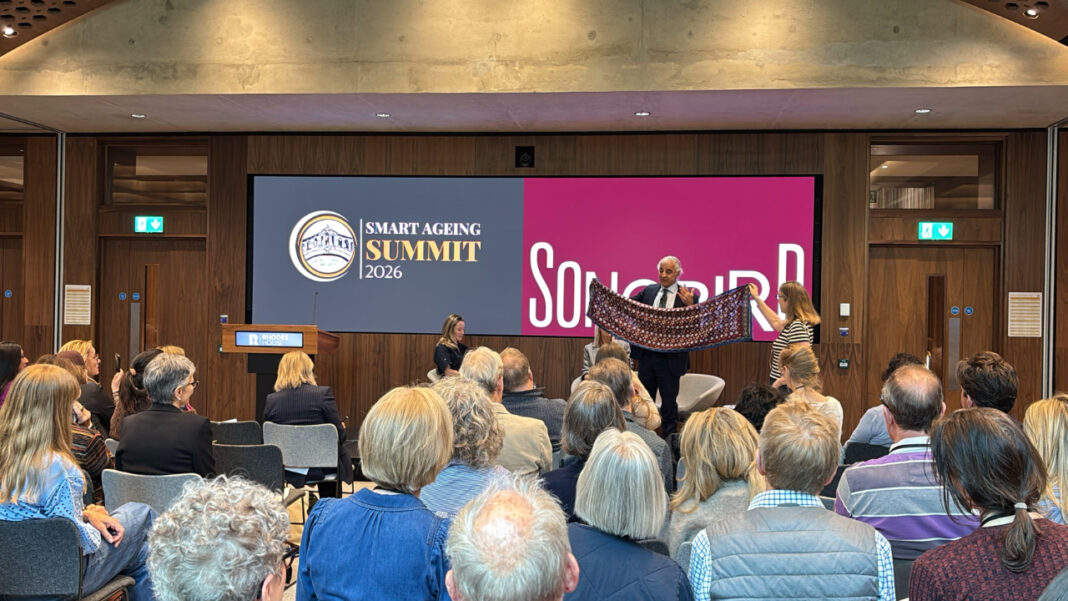
The innovative Smart Ageing Summit, hosted by the Oxford Longevity Project, took place at Oxford University this month, bringing together world-class scientists, startups, and experts to explore how to live longer, better before a sold-out audience.
Building on the success of previous years, the fifth annual Smart Ageing Summit focused on diet and longevity, exploring the latest research into nutrition, metabolism, brain health, and healthy ageing. While the event primarily focused on non-medicalized interventions, this year’s summit also introduced a new feature: a Breakthrough Biotech Panel hosted by Rebecca Newman of the Financial Times.
Professor Chris van Tulleken delivered the keynote address. Known to many from television and as a New York Times bestselling author, Professor van Tulleken discussed how ultra-processed and convenience foods affect not only what we eat, but also how much we consume.
He was joined by Professor John Todd, who focused on reducing dementia risk by calming the immune system, including through accessible interventions such as existing vaccines; Dr Anant Jani, whose shared Gus work on how environment and deprivation shapes diet and health outcomes; and Dr. Ellen Fallows, who explored common misconceptions around weight loss and GLP-1 receptor medications. Dr. Nick Norwitz, shared his own metabolism research and self-experimentation work that challenge conventional thinking around cholesterol, plaque burden, and heart health.
One of the most anticipated discussions of the day was the Breakthrough Biotech Panel: Sleep, Brain Health and Chronic Inflammation.
The panel brought together the CEOs of two pioneering biotech companies: Dr. Jane Rhodes of AstronauTx and Dr. Simba Gill of Songbird Health Sciences. Dr. Rhodes shared AstronauTx’s novel approach to improving deep sleep — the critical restorative phase during which the brain’s glymphatic system becomes most active, clearing toxic proteins and metabolic waste linked to dementia and neurodegenerative disease. Dr. Gill introduced Songbird’s immunobiotics platform, which is designed to harness T regulatory cells (Tregs), the immune cells responsible for keeping the immune system in balance and preventing chronic inflammation — an area highlighted by last year’s Nobel Prize in Physiology or Medicine.
The session served as the public debut for both stealth-mode startups, offering attendees a rare first glimpse into the pioneering therapeutic approaches underway within each company.
Held once again at the prestigious Rhodes House, attendees experienced high-quality hospitality and health-focused cuisine aligned with many of the recommendations discussed throughout the day. In addition to the talks, attendees also took part in the summit’s signature movement breaks, dance sessions, breathwork, and “exercise snacking” led by Lavina Mehta MBE.
“We all know that connecting with our tribe and living in vibrant communities is one of the keys to longer, healthier lives, so we were excited once again bring together this group of leading scientific researchers and clinicians to discuss the topic of diet and longevity, while also offeringattendees a unique opportunity to experience the magic of Rhodes House. The Oxford Longevity Project is always looking for ways to bring the latest in longevity science to the public in practical ways, so to unveil two pioneering biotech start-ups was particularly exciting,” said Co-Founder of the Oxford Longevity Project and CEO of Oxford Healthspan, Leslie Kenny.
“The summit and our report was inspired by David Attenborough’s television programme and recent 100th birthday! He epitomises the OLPs principle that the ageing process is not the main cause of the common prblems in later life. They are caused by environmental factors, not by genetic factors and can therefore be modified in many cases by adapting better to the modern environment and, even better, working to change it!, says Sir Muir Gray, board member of The Oxford Longevity Project.