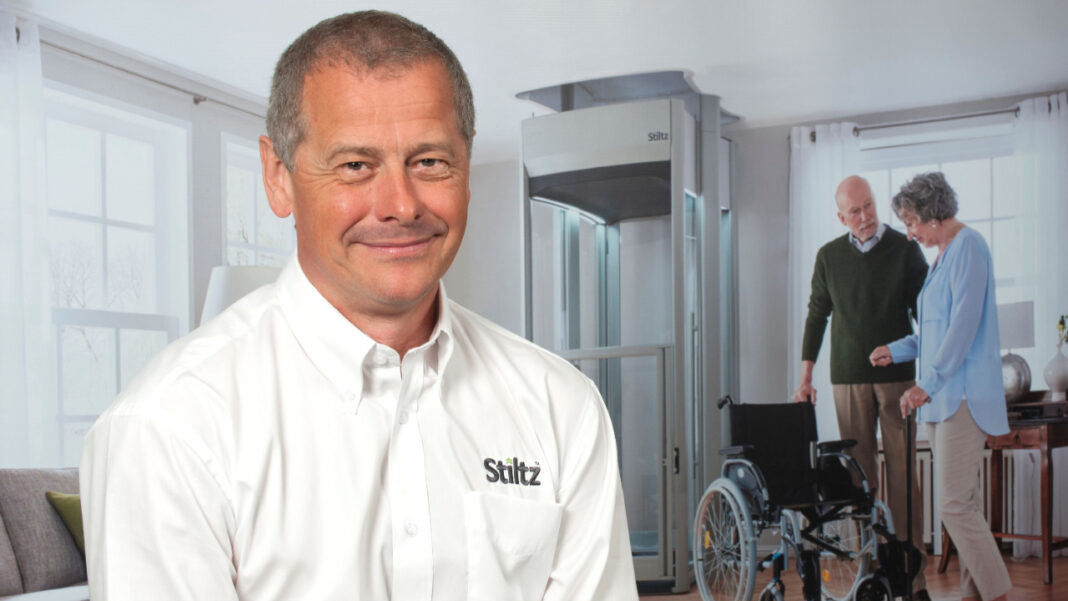
“Elevating Housing: Why the Future of UK Homes Must Look Beyond the Staircase” exposes the urgent need for accessible, future-proof homes amid a growing crisis.
Stiltz Homelifts, the award-winning manufacturer and installer of domestic lifts, has today issued a stark warning in its new white paper, “Elevating Housing: Why the Future of UK Homes Must Look Beyond the Staircase.” The report reveals that the UK is facing a housing crisis for older people, a ticking time bomb that threatens to displace millions in the coming decades.
The white paper reveals that the number of people aged 65 and over is projected to exceed 27% of the UK population by 2072. The report highlights that the new homes being built today are not designed to accommodate the mobility and accessibility needs of this demographic. Stiltz research shows that while 70% of adults over 50 want to stay in their current homes, nearly one in four fear they will be forced to move as their mobility declines.
“We’re building homes for the moment, not for life,” said Mike Lord, CEO of Stiltz Homelifts. Britain’s obsession with building upwards with townhouses and narrow new builds is creating a generation facing future home displacement. Without accessible design, millions of older people risk being trapped in homes they can no longer safely navigate.”
The scale of the problem extends beyond inconvenience. Falls in the home cost the NHS an estimated £2.3 billion per year. A third of people over 65 and half of those over 80 fall at least once each year, making falls the most common cause of injury-related death in the over-65 age group.
Across the UK, more than 2.3 million people aged 55 and over are living in “non-decent” homes, properties that fail basic health, safety or accessibility standards. Many are already being forced to downsize, move in with family, or enter care homes, not out of choice but necessity.
“This isn’t just about comfort when we grow old, it’s about crisis prevention,” added Mike Lord. “Poorly designed housing is driving older people out of their homes and costing public services billions. Unsuitable housing is placing unnecessary pressure on families, the NHS and the social care systems. We must step back and look at what a future-proof home looks like.”
The UK also faces a critical shortfall in specialist housing. According to the UK Seniors Housing Report 2024, the nation is on course to face a shortfall of 46,000 retirement and seniors housing units within five years. Fewer than 7,500 new homes suitable for later living are being built each year — far below the estimated 50,000 required annually to meet demand.
The Stiltz white paper calls for immediate action to ensure new homes are designed with accessibility and longevity at their core. Stiltz’s recommendations include:
- Mandatory “lift-ready” or “mobility-adaptable” design in all new housing
- National adoption of M4(2) accessibility standards and wider use of M4(3) for wheelchair-accessible homes
- Incentives for developers to integrate homelifts and inclusive layouts at the build stage
- Public awareness campaigns to normalise inclusive housing design
“Ageing in place shouldn’t be a privilege, it should be the standard,” said Mike Lord. “We have an opportunity now to design homes that evolve with us, that support independence, and that protect people, and the NHS, from the long-term costs of inaction. We need to act now.”
The full white paper, ‘Elevating Housing: Why the Future of UK Homes Must Look Beyond the Staircase’, is available to download on Stiltz’s website.