After losing his mother before his own children had the chance to know her, London-based entrepreneur Dhilon Solanki began thinking about how easily the stories that define a family can disappear. The result is Story Locker, a new personal podcast platform built around the idea that our memories could become one of the most valuable things we leave behind.
Most technology businesses begin with a problem that needs solving and, for Dhilon Solanki, that problem was deeply personal.
His mother died before his children had the opportunity to really know her and, as the years passed, he became increasingly conscious that what had been lost was not simply a person, but many of the stories, experiences and small details that had made her who she was.
Photographs remained, as did other family memories, but they could not recreate her voice or allow another generation to hear her tell the stories of her own life, which left Solanki increasingly aware of just how easily those personal histories can disappear.
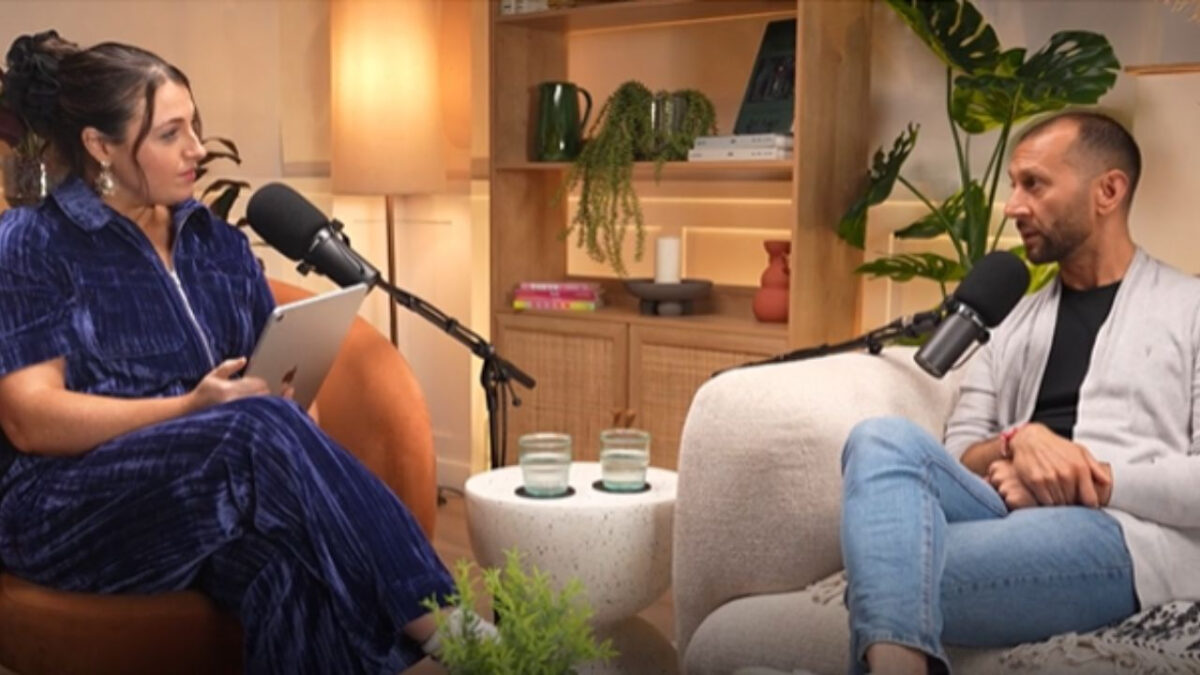
It was an experience that eventually led him to develop Story Locker, a personal podcast platform designed to help people record their life stories professionally and preserve them for their families and future generations.
The premise is deliberately straightforward using conversation to draw out the experiences that matter rather than asking people to sit in front of a blank page and document their lives, whether that means childhood memories, family, relationships, careers, turning points, achievements, mistakes or the moments that may never otherwise make it into the family archive.
For Solanki, however, Story Locker is not simply a sentimental proposition, but a business built around a wider behavioural shift in the way people think about digital legacy, family history and the huge volume of personal information that is created, stored and often ultimately lost. The commercial potential is also significant, with Solanki pointing to industry estimates suggesting the genealogy market could grow from around £2.5 billion to £8.8 billion by 2030.
“We take thousands of photographs and videos and we document more of our lives than any generation before us, but that doesn’t necessarily mean we are preserving the things that matter most,” says Solanki.
“You can have a phone full of photographs of somebody and still realise there are questions you never asked them. What was their childhood really like? What were they afraid of? How did they meet their partner? What were the moments that changed them? Those are the stories that disappear.”
It is a problem Solanki describes as a growing form of “memory debt”, referring to the accumulation of stories, knowledge and personal history that families assume they will capture one day, but frequently do not, while the demographic and technological backdrop makes the proposition particularly timely.
Families are increasingly geographically dispersed, more communication takes place digitally and artificial intelligence is accelerating questions around identity, authenticity and what constitutes a meaningful personal record, creating a backdrop against which Story Locker is attempting to build something deliberately human.
Rather than simply providing recording software, the concept centres around professionally guided conversations that help individuals tell a coherent story in their own voice, with those recordings then kept securely and shared with the people the individual chooses.
The ambition is to turn something families have historically approached informally into a recognised category of its own, while encouraging people to think about preserving their personal histories before there is a sense of urgency around doing so.
Early signs suggest the idea resonates. Story Locker has already recorded 100 personal podcasts for families, while fitness entrepreneur Joe Wicks used the service to capture his grandmother’s life story around her 87th birthday, an example Solanki believes demonstrates that recording somebody’s story need not be associated with illness, bereavement or the end of life.
That distinction is important to the company’s positioning, with Solanki wanting Story Locker to become something people choose to do at milestone birthdays, anniversaries, retirements or other significant stages of life, rather than something families realise they should have done when it is too late. Indeed, around 80 per cent of sales so far have come from customers buying the experience as a gift for their parents or grandparents, according to Solanki.
“There is sometimes an assumption that preserving somebody’s life story is quite a sombre thing, but it doesn’t have to be,” he says.
“These conversations can be incredibly funny and uplifting. People remember things they haven’t talked about for years, families hear stories they have never heard before and the value is in capturing somebody as they really are.”
From a business perspective, that creates a potentially broad market, with the initial consumer proposition capable of extending across generations while also opening up opportunities around partnerships and gifting. The strong proportion of gift purchases offers an early indication of how families are choosing to engage with the service.
The wider growth of genealogy, family-history services and digital legacy products also suggests consumers are already willing to spend money understanding and preserving where they came from, giving Story Locker an opportunity to enter that market with a proposition Solanki believes is more intimate than a family tree and more structured and enduring than the fragmented digital content most people currently leave behind.
More recently, Story Locker has secured backing from Cornerstone VC to support the next stage of its growth, including the use of technology to help scale the business while retaining the personal, professionally guided approach at its heart.
The challenge, as with many businesses creating a relatively new category, will be building awareness of a need that consumers may not recognise until it becomes urgent, which means Solanki is effectively encouraging people to preserve something whose value can be difficult to quantify until it has gone. That challenge also represents what he sees as the company’s greatest opportunity, because while technology has made recording and storing information extraordinarily easy, it has not necessarily made people better at deciding what deserves to be preserved.
As AI becomes capable of generating increasingly convincing versions of voices, images and personalities, Solanki believes authentic first-person storytelling may actually become more, rather than less, valuable.
“We’re moving into a world where technology will be able to recreate almost anything,” he says. “But there is something very powerful about knowing that you are hearing somebody genuinely telling their own story, in their own words and in their own voice.”
For Solanki, the commercial ambition for the business therefore sits alongside a much simpler personal measure of its worth, because while his own children will never be able to sit down with their grandmother and ask her about her life, Story Locker gives other families the opportunity to capture those conversations and preserve them for generations to come.